Qwen Image 2512: New Features Guide
Qwen-Image-2512 represents the latest iteration of QwenLM's powerful image generation foundation model, introducing groundbreaking features that significantly enhance text rendering, scene composition, and overall image quality. This open-source project has rapidly gained traction in the AI community, amassing over 6.7k stars on GitHub and establishing itself as a competitive alternative to closed-source image generation APIs. This article focuses on the new features and improvements in Qwen-Image-2512, along with a brief overview of the project's development history.
The model's evolution reflects the rapid pace of innovation in generative AI, with Qwen-Image-2512 building upon previous achievements while introducing revolutionary capabilities. From enhanced text rendering to sophisticated scene composition, the latest version demonstrates significant improvements that address real-world challenges in image synthesis and manipulation.
Brief Development History
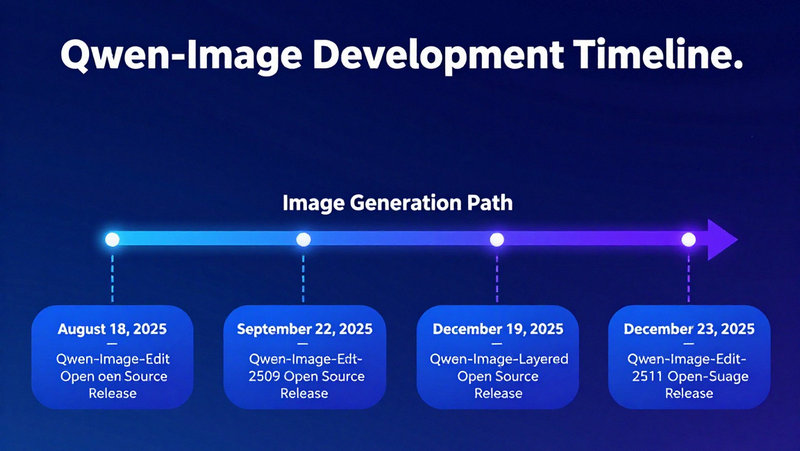
Qwen-Image began as an ambitious open-source project to create a foundation model for image generation that could compete with proprietary solutions. The initial release established the core architecture, demonstrating the model's potential in text rendering and basic image generation. Licensed under Apache 2.0, the project gained significant community attention, with developers and researchers contributing to its growth and refinement.
The project expanded into two main branches: text-to-image generation (Qwen-Image) and image editing (Qwen-Image-Edit), allowing for focused development in each domain. The progression from early versions to Qwen-Image-2512 demonstrates the project's commitment to addressing user needs and technical limitations, with each iteration systematically building upon previous achievements. The model's evolution showcases significant advancements that establish Qwen-Image as a leading open-source solution in AI image generation.
Enhanced Text Rendering Capabilities
Qwen-Image-2512 introduces significant improvements in complex text rendering, representing a major advancement in the model's ability to accurately render text within generated images. This enhancement addresses one of the most challenging aspects of image generation: maintaining text legibility, proper font rendering, and correct text placement within complex visual compositions. The model can now generate images with text elements that are clear, readable, and contextually appropriate.
The text rendering improvements enable users to create images with embedded text that maintains high quality and readability across various styles and contexts. Whether generating posters, signs, documents, or any visual content requiring text elements, Qwen-Image-2512 demonstrates superior capability in understanding and rendering textual content as part of the overall image composition. This feature opens up new possibilities for practical applications in design, marketing, and content creation workflows where accurate text rendering is essential.
Advanced Scene Composition and Visual Coherence
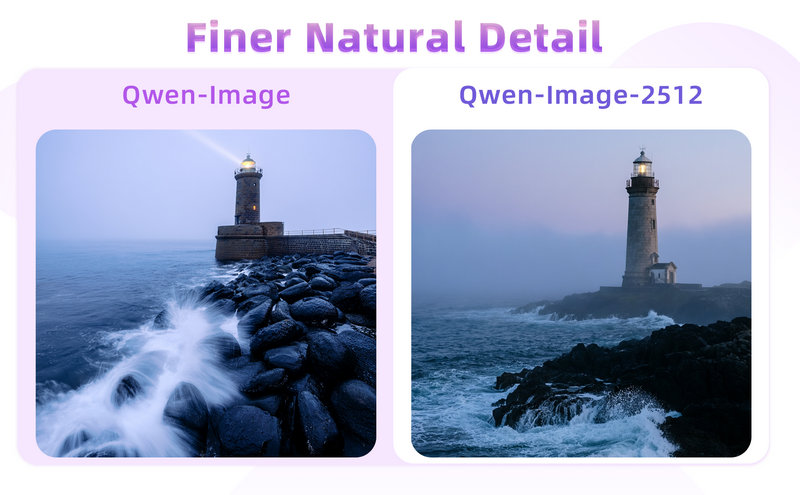
Qwen-Image-2512 excels at generating complex scenes with multiple elements, maintaining spatial relationships and visual coherence throughout the composition. The model demonstrates remarkable progress in understanding complex prompts and generating high-fidelity images that accurately reflect textual descriptions. This capability extends to scenes with intricate details, multiple objects, and sophisticated spatial arrangements.
The enhanced scene composition capabilities enable the generation of visually rich and contextually appropriate images across diverse scenarios. From detailed architectural visualizations to complex narrative scenes, the model maintains consistency in lighting, perspective, and object relationships. This advancement makes Qwen-Image-2512 particularly valuable for applications requiring high-quality visual content with complex compositional requirements, including professional design workflows and creative content generation.
Improved Prompt Understanding and Image Quality
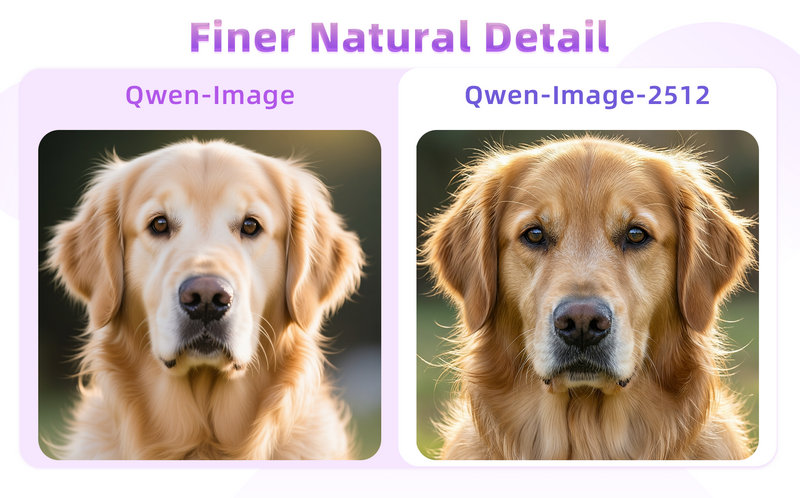
Qwen-Image-2512 shows substantial improvements in prompt understanding, enabling more accurate interpretation of user intentions and generation of images that closely match the described content. The model demonstrates enhanced capability in processing nuanced descriptions, understanding context, and translating textual prompts into visually coherent and accurate representations.
The quality improvements extend beyond basic image generation to encompass fine details, realistic textures, and natural lighting effects. The model produces images with improved visual fidelity, making it suitable for professional applications where quality and accuracy are paramount. These enhancements position Qwen-Image-2512 as a competitive solution for various use cases, from creative content generation to technical visualization, rivaling closed-source alternatives in both quality and accessibility.
Technical Performance Improvements
Qwen-Image-2512 incorporates several key technical improvements that enhance its overall performance and usability. The model demonstrates superior handling of complex prompts, better understanding of spatial relationships, and improved generation of realistic textures and details. These technical advancements contribute to the model's ability to produce high-quality images that meet professional standards.
The latest version also shows improvements in generation speed and efficiency, making it more practical for real-world applications. The model's architecture optimizations enable faster inference while maintaining high-quality output, addressing one of the common challenges in image generation models. These technical improvements, combined with the enhanced capabilities, make Qwen-Image-2512 a comprehensive solution for diverse image generation needs.
Practical Applications and Use Cases
Qwen-Image-2512's enhanced capabilities make it valuable for a wide range of practical applications. The improved text rendering enables use in marketing materials, educational content, and design workflows where text integration is essential. The advanced scene composition capabilities support applications in storytelling, concept visualization, and creative content generation.
The model's ability to generate high-quality images from complex prompts makes it suitable for professional design workflows, content creation, and rapid prototyping. Users can leverage Qwen-Image-2512 to quickly visualize concepts, create marketing materials, and generate visual content that meets professional quality standards. These practical applications demonstrate the model's evolution from a research project to a practical tool for real-world use cases across various industries and creative domains.
Community Support and Ecosystem
The Qwen-Image project benefits from extensive community support across multiple platforms, reflecting its open-source philosophy and commitment to accessibility. HuggingFace's Diffusers library has supported Qwen-Image since day zero, with ongoing development for LoRA and fine-tuning workflows. ModelScope provides comprehensive support through DiffSynth-Studio and DiffSynth-Engine, offering low-GPU-memory layer-by-layer offload (inference within 4GB VRAM), FP8 quantization, and LoRA training capabilities.
Additional platforms like WaveSpeedAI, LiblibAI, SGLang-Diffusion, and acceleration methods such as cache-dit further expand the ecosystem, ensuring that users can access Qwen-Image-2512 through their preferred platforms and tools. This comprehensive ecosystem support demonstrates the project's commitment to making advanced image generation accessible to a broad user base, regardless of technical expertise or computational resources.
Qwen-Image-2512 represents a significant milestone in the project's journey, combining enhanced text rendering, advanced scene composition, and improved image quality into a comprehensive image generation solution. The new features introduced in this version address key challenges in AI image generation, making the model more practical and accessible for diverse applications. With strong community support, transparent evaluation mechanisms through AI Arena, and commitment to open-source principles, Qwen-Image-2512 demonstrates the power of collaborative development in advancing the frontiers of AI-powered image generation.
The ongoing development of Qwen-Image and the continuous improvements in each version showcase the project's potential to shape the future of AI image generation. The latest features in Qwen-Image-2512 position it as a competitive, accessible alternative to proprietary solutions, enabling users across various industries to leverage advanced image generation capabilities for their creative and professional needs.
The above is the full content of Qwen Image 2512: New Features Guide